Easy Bold Asian Salad Recipe for a Crave-worthy, Fresh Meal
Asian salad recipe brings together the perfect harmony of crisp vegetables, tender edamame, and a zesty soy-ginger dressing that makes each bite a delightful experience. This vibrant dish combines the freshness of mixed greens with the crunch of cucumbers and cabbage, all enhanced by the nutty flavor of toasted sesame seeds.
Whether you’re looking for a light lunch option or a colorful side dish for dinner, this Asian-inspired salad delivers both nutrition and incredible taste. The combination of textures and flavors creates a balanced meal that’s as satisfying as it is healthy.
Vibrant Asian Salad Ingredients for a Refreshing Meal
Everything You Need for Your Asian Salad Recipe
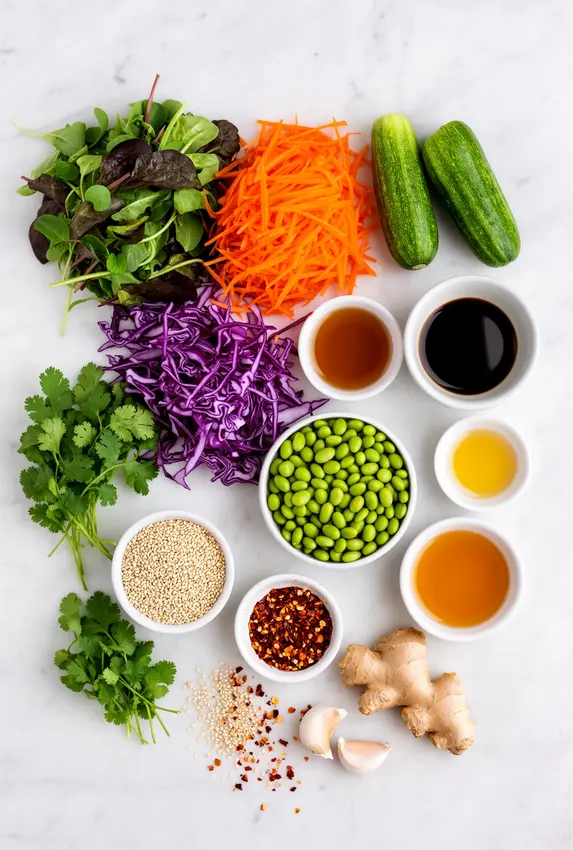
- 4 cups mixed greens (romaine, butter lettuce, or spring mix)
- 1 cup shredded carrots
- 1 cup red cabbage, thinly sliced
- 1 cup cooked edamame, shelled
- 1 medium cucumber, thinly sliced
- 1/4 cup chopped cilantro
- 2 tablespoons toasted sesame seeds
- 1/4 cup soy-ginger dressing (homemade or store-bought)
- 1 red bell pepper, thinly sliced (optional)
- 1/2 cup sliced water chestnuts (optional)
- 1/4 cup thinly sliced green onions (optional)
- 1 tablespoon rice vinegar (optional)
- 1 teaspoon honey or maple syrup (optional)
- Crispy wonton strips or rice noodles for garnish (optional)
For the Homemade Soy-Ginger Dressing
- 3 tablespoons low-sodium soy sauce or tamari
- 2 tablespoons rice vinegar
- 1 tablespoon sesame oil
- 1 tablespoon fresh ginger, grated
- 1 clove garlic, minced
- 1 teaspoon honey or maple syrup
- 1/4 teaspoon red pepper flakes (optional)
Perfect Step-by-Step Instructions for Asian Salad Success
How to Make It Perfectly Every Time
- Toast 2 tablespoons of sesame seeds in a dry skillet over medium heat for 2-3 minutes, stirring frequently until they become golden brown and fragrant. Remove from heat immediately to prevent burning and set aside to cool.
- Prepare the soy-ginger dressing by combining soy sauce, rice vinegar, sesame oil, grated ginger, minced garlic, and honey in a small bowl. Whisk vigorously until well combined and slightly emulsified. Taste and adjust seasoning if needed – add more honey for sweetness or more vinegar for tanginess.
- In a large salad bowl, add the mixed greens as your base layer. The greens should be dry and crisp for the best texture – use a salad spinner if needed after washing.
- Layer the colorful vegetables on top of the greens: shredded carrots, thinly sliced red cabbage, cucumber slices, and any optional vegetables you’re including like red bell pepper or water chestnuts.
- Add the cooked edamame, distributing it evenly throughout the salad. The edamame should be cooled completely before adding to prevent wilting the greens.
- Sprinkle the chopped cilantro and optional green onions over the salad.
- Just before serving, drizzle about half of the soy-ginger dressing over the salad and toss gently to coat all ingredients. Add more dressing gradually as needed, being careful not to overdress.
- Finish by sprinkling the toasted sesame seeds on top for a perfect nutty crunch and visual appeal.
- For best flavor development, allow the salad to rest for about 15 minutes before serving, or serve immediately if you prefer maximum crispness.
Expert Tips & Variations for Your Asian Salad Recipe
Simple Ways to Customize the Recipe for Any Occasion
- For a protein boost, add grilled chicken, seared tofu, or cooked shrimp to transform this side dish into a complete meal.
- Create a make-ahead version by layering the ingredients in a large jar with the dressing at the bottom and greens at the top – shake when ready to eat.
- For extra crunch, try adding sliced almonds or chopped peanuts instead of (or in addition to) the sesame seeds.
- Make it spicy by adding thinly sliced jalapeños or a drizzle of sriracha to the dressing for heat lovers.
- For a heartier version, mix in some cooked and cooled soba noodles or brown rice to create an Asian noodle salad variation.
- Swap the cilantro for Thai basil or mint if you’re looking for a different herbaceous flavor profile.
- For a sweeter twist, add mandarin orange segments or thinly sliced mango to balance the savory elements with natural fruit sweetness.
Delicious Salad Dressings That Pair Well With Asian Salad
Complementary Homemade Dressings for Maximum Flavor
While the soy-ginger dressing in this recipe is perfectly balanced for an Asian salad, you might want to experiment with these alternative dressings:
- Miso Vinaigrette – This umami-rich dressing adds depth and complexity to the fresh vegetables with its fermented soybean base.
- Asian Sesame Dressing – Amplify the sesame flavor in your salad with this perfectly balanced dressing that combines toasted sesame oil, rice vinegar, and a hint of sweetness.
- Honey Mustard Dressing – For a fusion twist, this slightly sweeter option provides a wonderful contrast to the crisp vegetables in your Asian salad.
What to Serve With Your Asian Salad Recipe
Perfect Main Dishes for a Complete Meal
This versatile Asian salad works beautifully alongside many main dishes. Consider serving it with:
- Teriyaki salmon or chicken for a protein-rich complement that shares similar flavor profiles
- Vegetable spring rolls or dumplings for an Asian-inspired feast
- Miso soup for a traditional Japanese meal structure
- Simple grilled tofu steaks for a plant-based protein option
Side Dishes That Create a Balanced Menu
Round out your meal with these complementary sides:
- Steamed brown rice or quinoa to add hearty grains
- Grilled baby bok choy for another green vegetable option
- For a refreshing side that echoes the cucumber element in your salad, try this flavorful Asian cucumber salad that uses a similar flavor palette but with a different preparation method
Storage Tips for Keeping Your Asian Salad Fresh
How to Store It Safely for Maximum Freshness
For optimal freshness, it’s best to store the components of your Asian salad separately:
- Store the prepared vegetables and greens in an airtight container lined with paper towels to absorb excess moisture. These will stay fresh for 3-4 days in the refrigerator.
- Keep the homemade soy-ginger dressing in a separate airtight jar or container in the refrigerator for up to one week. The oils may solidify when cold, so allow it to come to room temperature and shake well before using.
- Store toasted sesame seeds in a cool, dry place in an airtight container for up to one month to maintain their nutty flavor.
- If you’ve already dressed the salad, it will keep for about 24 hours in the refrigerator, though the vegetables will soften and lose some crispness.
- For meal prep, consider assembling individual portions in containers with the dressing on the side to dress just before eating.
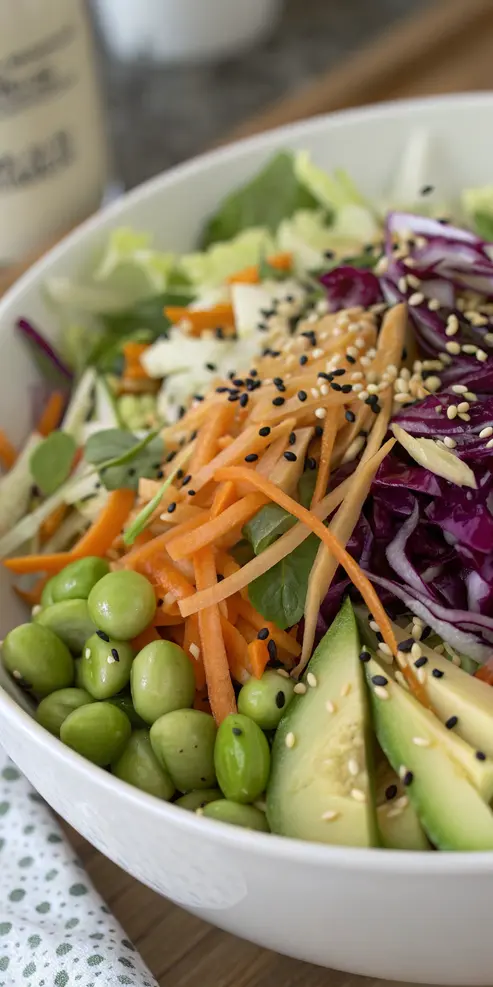
FAQs About asian salad recipe
Can I make this Asian salad recipe ahead of time?
Yes, you can prepare this salad up to 24 hours in advance, but for the best texture, keep the dressing separate until serving time. Store the prepared vegetables and greens in an airtight container in the refrigerator, and add the dressing, sesame seeds, and any crispy toppings just before serving to maintain optimal crunch and freshness.
Is this Asian salad recipe suitable for a gluten-free diet?
This Asian salad recipe can easily be made gluten-free by substituting regular soy sauce with tamari or certified gluten-free soy sauce. Also ensure that any optional ingredients like wonton strips are made with gluten-free flour, or simply omit them. Always check packaged ingredients for hidden gluten sources or cross-contamination warnings.
How can I make this Asian salad recipe more filling?
To transform this Asian salad into a more substantial meal, add a protein source such as grilled chicken, salmon, shrimp, tofu, or tempeh. You can also incorporate heartier elements like cooked quinoa, brown rice, or soba noodles. Adding avocado slices or a sprinkle of nuts will increase the healthy fat content, making the salad more satiating without compromising its fresh, crisp character.
Celebrating the Versatility of Asian Salad
Final Thoughts
This vibrant Asian salad recipe brings together the perfect balance of fresh vegetables, protein-rich edamame, and a zesty soy-ginger dressing that makes every bite a delight. What makes this salad special is not just its colorful appearance, but the harmonious combination of textures and flavors – from the crisp cucumber to the crunchy cabbage and the nutty sesame seeds.
The beauty of this recipe lies in its versatility. Whether you’re serving it as a light lunch, a side dish for dinner, or bringing it to a potluck, it’s sure to impress with its vibrant colors and bold flavors. The salad also adapts well to seasonal variations and personal preferences, allowing you to make it your own while maintaining the core Asian-inspired elements.
As with any great salad, the key to success is using the freshest ingredients possible and finding the perfect balance in your dressing. Don’t be afraid to adjust the flavors to suit your taste – a little more ginger for zing or extra honey for sweetness can make all the difference in creating your perfect Asian salad recipe.
Other Salads to Try
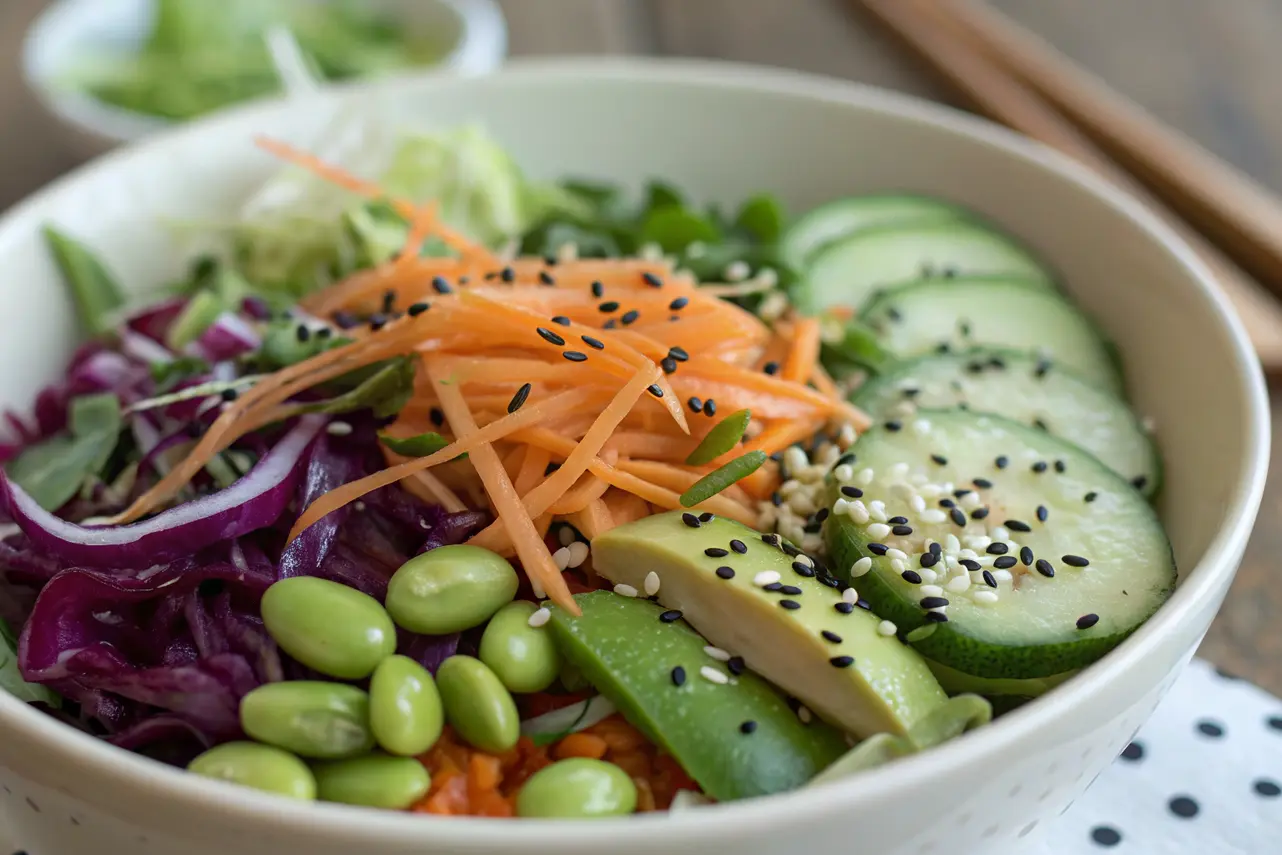
Fresh Asian Salad with Soy-Ginger Dressing
Ingredients
Equipment
Method
- Toast sesame seeds in a dry skillet over medium heat for 2-3 minutes, stirring frequently until golden brown and fragrant. Remove from heat immediately and set aside to cool.
- In a small bowl, whisk together soy sauce, rice vinegar, sesame oil, grated ginger, minced garlic, and honey until well combined to make the dressing.
- In a large bowl, combine the mixed greens, shredded carrots, sliced red cabbage, cucumber slices, and edamame.
- Sprinkle the chopped cilantro over the salad.
- Drizzle about half of the soy-ginger dressing over the salad and toss gently to coat. Add more dressing as needed.
- Top the salad with the toasted sesame seeds.
- Serve immediately for maximum crispness, or chill for 15 minutes to allow flavors to meld together.
Notes
- For meal prep, store components separately and assemble just before serving.
- Add protein like grilled chicken or tofu to make it a complete meal.
- The dressing can be made up to a week ahead and stored in the refrigerator.