Creamy Tahini Caesar Dressing: Perfect Balance of Nutty and Tangy
Tahini Caesar dressing transforms the classic Caesar into something extraordinary with its nutty depth and creamy texture. This Middle Eastern twist uses tahini—a rich paste made from ground sesame seeds—to create a dressing that’s both familiar and excitingly different. If you’ve been wondering what tahini tastes like or looking for a tahini substitute in your regular recipes, this versatile dressing is the perfect introduction to its distinctive flavor profile. The combination of tahini with traditional Caesar ingredients creates a balanced dressing that’s slightly nutty, wonderfully creamy, and brightened with fresh lemon.
Versatility Beyond the Caesar Salad
While this tahini dressing was inspired by the classic Caesar, its uses extend far beyond romaine lettuce. Drizzle it over an arugula salad for a peppery contrast, use it as a dip for fresh vegetables, spread it on sandwiches, or even as a sauce for grilled chicken or roasted vegetables. The olive oil and tahini base provides healthy fats while keeping the dressing satisfyingly rich. For those looking to expand their salad dressing repertoire beyond standard olive oil dressings, this tahini Caesar offers a delicious alternative that works with almost any salad combination you can imagine.
Ingredients for Tahini Caesar Dressing
Fresh Components That Make the Difference
- ¼ cup Olive Oil
- ¼ cup Tahini
- 2 tablespoons Plain Yogurt OR Plain Non-Dairy Yogurt
- ¼ cup Lemon Juice (about one whole lemon)
- 3 Garlic Cloves
- ½ cup Freshly-Grated Parmesan, + more to garnish
- ¼ cup Water, + more if needed
- ¼ teaspoon Sea Salt
- ¼ teaspoon Cayenne pepper
- ¼ teaspoon Ground Black Pepper
Quality Considerations for Better Flavor
When making tahini Caesar dressing, the quality of your ingredients significantly impacts the final flavor. Look for a high-quality tahini that’s smooth and not bitter—this is essential as tahini forms the backbone of this dressing. The best tahini should pour easily with a light, nutty aroma. For the olive oil, choose a good extra virgin variety with a smooth finish rather than one with a sharp peppery bite. Fresh lemon juice is non-negotiable here; bottled simply won’t provide the same brightness. And while pre-grated Parmesan is convenient, freshly grated offers superior flavor and melts into the dressing more seamlessly.
How to Make Tahini Caesar Dressing
Simple Preparation Method
- Gather all ingredients and ensure they’re at room temperature for the smoothest blending.
- Peel the garlic cloves and roughly chop them to help your food processor blend more efficiently.
- Add all ingredients to your food processor: olive oil, tahini, yogurt, lemon juice, garlic cloves, Parmesan, water, salt, cayenne pepper, and black pepper.
- Pulse several times to combine the ingredients, then process continuously until the dressing becomes smooth and creamy, about 30-60 seconds.
- Stop and scrape down the sides of the processor bowl if necessary to incorporate all ingredients.
- Check the consistency—this dressing is naturally thick, but if you prefer it thinner, add additional water one tablespoon at a time.
- Taste and adjust seasonings as needed, adding more salt, pepper, or lemon juice to achieve your preferred flavor balance.
- Transfer to a serving container or storage jar with a tight-fitting lid.
Texture and Consistency Tips
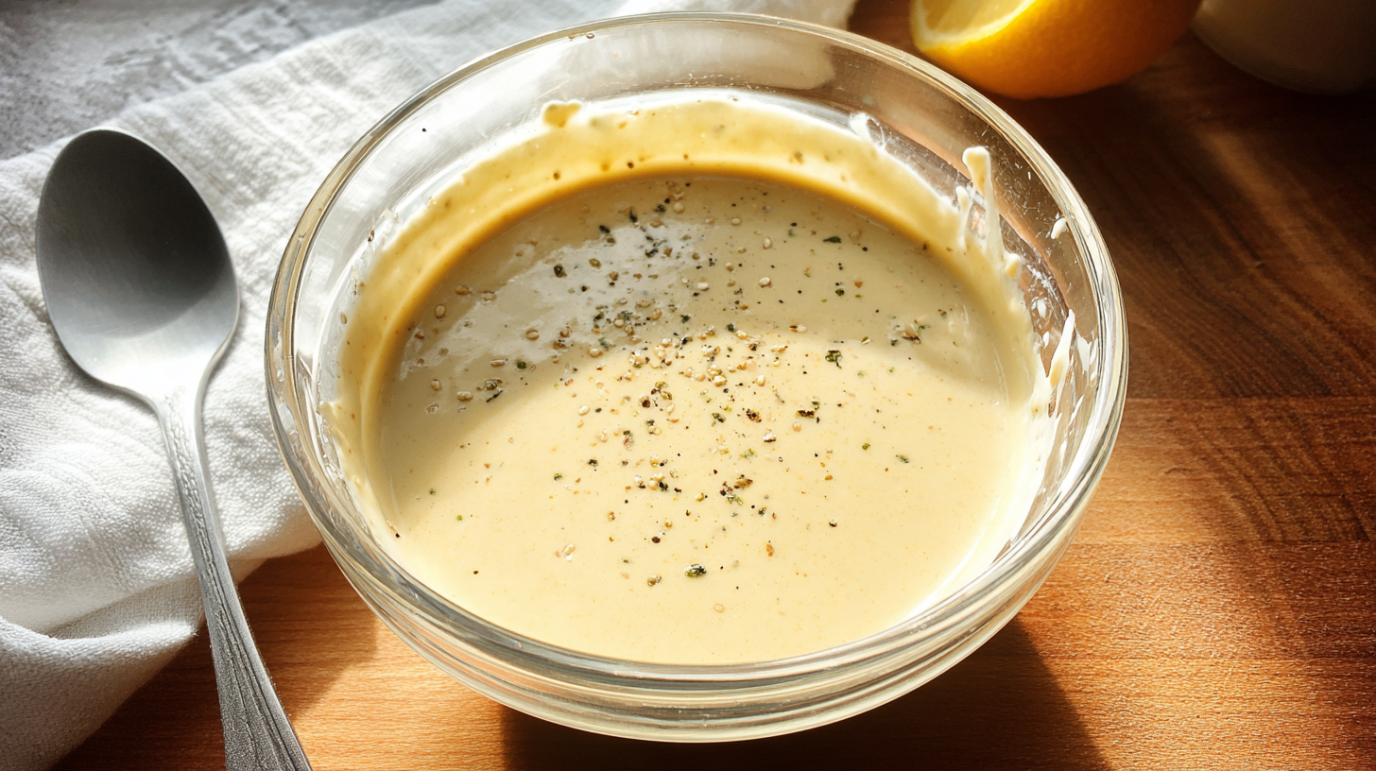
The ideal tahini Caesar dressing should coat the back of a spoon but still pour easily. If your dressing seems too thick after processing, don’t worry—this is normal with tahini-based sauces. For a thinner consistency perfect for delicate greens, gradually add water while the processor is running until you reach your desired thickness. Conversely, if your dressing seems too thin (perhaps from extra-juicy lemons), you can thicken it by adding a bit more tahini or Parmesan. Remember that the dressing will naturally thicken somewhat when refrigerated, so if you’re preparing it ahead, you might want to make it slightly thinner than your final desired consistency.
Tips & Variations for Perfect Tahini Caesar Dressing
Substitutions for Dietary Needs
- Tahini Alternatives: If you need a substitute for tahini, try sunflower seed butter or cashew butter for a similar nutty flavor and creamy texture.
- Dairy-Free Option: Replace Parmesan with nutritional yeast (3-4 tablespoons) and use non-dairy yogurt for a completely plant-based tahini dressing.
- Low-Sodium Version: Create a low sodium dressing by omitting the added salt and using less Parmesan or a low-sodium cheese alternative.
- Sesame Oil Substitute: If you want to enhance the sesame flavor but don’t have sesame oil, toast 1 tablespoon of sesame seeds and blend them into the dressing.
- Lemon Alternative: White wine vinegar can replace lemon juice in equal amounts if needed, though the flavor profile will change slightly.
Flavor Variations to Try
- Herb-Infused: Add 2 tablespoons of fresh herbs like parsley, dill, or basil for a garden-fresh twist.
- Asian-Inspired: Transform this into a Chinese salad dressing recipe by adding 1 teaspoon of rice vinegar and ½ teaspoon of grated ginger.
- Spicy Version: Double the cayenne or add a dash of hot sauce for those who enjoy heat.
- Anchovy Boost: For traditional Caesar flavor, blend in 1-2 anchovy fillets.
- Sweeter Profile: Add 1 teaspoon of honey or maple syrup to balance acidity and create a slightly sweeter dressing.
Troubleshooting Common Issues
If your tahini Caesar dressing separates or seems grainy, don’t panic—this is usually easy to fix. First, ensure your tahini is well-stirred before measuring, as natural separation occurs in the jar. If separation happens after mixing, a quick re-blend or vigorous shaking in a jar usually resolves the issue. For graininess, which can happen with some tahini brands, try blending longer or straining the finished dressing through a fine mesh sieve. Finally, if your dressing tastes too bitter (sometimes caused by the tahini), additional lemon juice or a touch of honey can balance the flavor beautifully.
Serving Ideas for Tahini Caesar Dressing
Perfect Salad Pairings
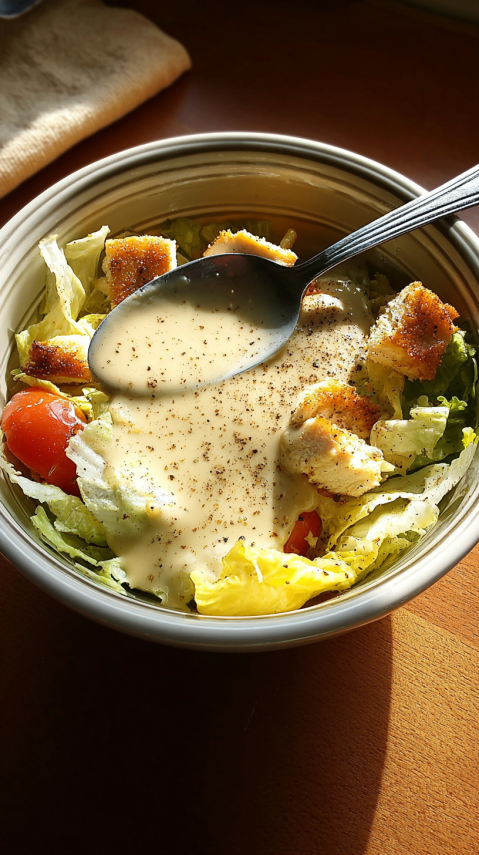
This versatile tahini Caesar dressing elevates almost any salad base beyond the traditional romaine. For a nutritious tahini salad experience, try these perfect pairings:
- Classic Caesar: Crisp romaine hearts, homemade croutons, and extra Parmesan shavings
- Mediterranean Bowl: Mixed greens, chickpeas, cucumber, cherry tomatoes, red onion, and olives
- Kale Power Salad: Massaged kale, roasted sweet potatoes, quinoa, and toasted pumpkin seeds
- Arugula Salad: Peppery arugula, thinly sliced pear, walnuts, and dried cranberries
- Grain Bowl: Farro or bulgur, roasted vegetables, and crumbled feta cheese
- Pasta Salad: Cold pasta with cherry tomatoes, cucumbers, bell peppers, and black olives
- Three-Bean Salad: Toss this dressing with three-bean salad for a protein-packed, flavorful twist.
Beyond Salads: Creative Uses
This tahini dressing’s versatility extends well beyond the salad bowl:
- Dipping Sauce: Use as a rich dip for fresh vegetable crudités, pita chips, or falafel
- Sandwich Spread: Replace mayonnaise with this dressing on wraps, sandwiches, or as a spread on burger buns
- Grain Bowls: Drizzle over Buddha bowls or grain bowls for added flavor
- Marinade: Use as a marinade for chicken, tofu, or fish before grilling or roasting
- Roasted Vegetables: Toss with roasted vegetables right after cooking for a flavor boost
- Potato Topper: Drizzle over roasted potatoes or use as a dip for sweet potato fries
Storage and Make-Ahead Tips for Tahini Caesar Dressing
Proper Storage Methods
This tahini Caesar dressing keeps wonderfully when stored properly. Transfer it to an airtight glass jar or container and refrigerate immediately after making. Does tahini need to be refrigerated? Yes, and so does this dressing, which will stay fresh for up to 7 days when kept cold. The olive oil may solidify slightly when chilled—this is completely normal and doesn’t affect quality. Simply remove the dressing from the refrigerator about 15 minutes before using, or run the closed container under warm water for a few seconds to bring it back to a pourable consistency.
Reviving Stored Dressing
When you’re ready to use your refrigerated tahini dressing, you’ll likely find it has thickened considerably—this is expected with tahini-based sauces. To revive it to the perfect consistency, shake the container vigorously (if using a jar with a tight lid) or give it a quick whisk. If it’s still too thick, add a teaspoon or two of water and stir until you reach your desired consistency. You may also need to rebalance flavors after storage—a squeeze of fresh lemon juice can brighten it back up beautifully. For optimal flavor, give stored dressing a taste before serving and adjust seasonings if necessary.
Other Vegan Dressings to Try
FAQs About Tahini Caesar Dressing
What is tahini made of and can I make it at home?
Tahini is made from ground sesame seeds that have been toasted and then processed into a smooth paste. To make tahini paste at home, toast 2 cups of hulled sesame seeds until lightly golden (about 5 minutes in a 350°F oven), then cool completely. Process the seeds in a food processor with 2-4 tablespoons of a neutral oil like avocado or light olive oil until smooth and pourable, which takes about 5-7 minutes of processing. Homemade tahini can be used immediately in this dressing recipe or stored in the refrigerator for up to a month.
What does tahini taste like and how does it change this dressing?
Tahini has a distinct nutty flavor with subtle bitter undertones—similar to unsweetened peanut butter but with a more sophisticated, earthy profile. In this Caesar dressing, tahini adds remarkable creaminess and depth that traditional Caesar dressings (which rely on raw egg and anchovy) don’t have. It creates a velvety texture while adding nutritional benefits like healthy fats, protein, and minerals. The slight bitterness of tahini is beautifully balanced by the bright lemon juice and savory Parmesan in this recipe.
What’s the best tahini substitute if I can’t find it or don’t like it?
If you need a substitute for tahini sauce in this recipe, the best alternatives are other seed or nut butters with minimal added ingredients. Sunflower seed butter works well for those with sesame allergies. Cashew butter provides excellent creaminess with a milder flavor. Almond butter can work but has a stronger distinct taste that will change the final flavor profile. In a pinch, Greek yogurt with a tablespoon of olive oil can provide creaminess, though you’ll lose the distinctive nutty notes that make this dressing special.
Conclusion
Why This Tahini Caesar Dressing Stands Out
This tahini Caesar dressing brings together the best of traditional Caesar flavors with the nutty depth of Middle Eastern tahini to create something truly special. Unlike conventional Caesar dressings that rely on raw eggs, this version offers a food-safe alternative that doesn’t compromise on creaminess or flavor. The combination of freshly grated Parmesan, bright lemon, and aromatic garlic creates a balanced profile that enhances everything it touches. Whether you’re new to tahini or a longtime fan looking for creative uses, this versatile dressing delivers restaurant-quality taste with simple pantry ingredients. It’s also adaptable to various dietary needs—easily made dairy-free, lower in sodium, or spiced to your preference.
Expand Your Homemade Dressing Collection
Now that you’ve mastered this tahini Caesar dressing, why not explore other homemade dressings that can transform your everyday salads? Making your own dressings means avoiding preservatives and customizing flavors exactly to your taste. Try pairing this Caesar with other homemade options like a classic vinaigrette, creamy avocado dressing, or honey mustard for a varied salad rotation throughout the week. Each homemade dressing in your collection offers the opportunity to transform simple greens into memorable meals. The satisfaction of creating something so flavorful from scratch is unmatched—and your taste buds will definitely thank you for leaving store-bought dressings behind!
Creamy Tahini Caesar Dressing
Ingredients
Equipment
Method
- Add all ingredients to a food processor: olive oil, tahini, yogurt, lemon juice, garlic cloves, Parmesan, water, salt, cayenne pepper, and black pepper.
- Pulse until completely smooth, stopping to scrape down the sides as needed.
- If the dressing is too thick, add additional water one tablespoon at a time until desired consistency is reached.
- Taste and adjust seasonings as needed, adding more salt, pepper or lemon juice to taste.
- Transfer to a serving bowl or storage container.
Notes
- Store in an airtight container in the refrigerator for up to 7 days.
- The dressing will thicken when cold; let it sit at room temperature for 10 minutes before using or add a splash of water to thin.
- For a dairy-free version, substitute nutritional yeast for the Parmesan and use non-dairy yogurt.