Quick Next-Level French Salad with Bold Herby Vinaigrette for Summer
French salad is a timeless culinary creation that captures the essence of French cuisine—simple, elegant, and bursting with fresh flavors. This classic dish combines crisp greens, vibrant vegetables, and a perfectly balanced vinaigrette that transforms ordinary ingredients into something truly remarkable.
In this recipe, we’ll explore how to create an authentic French salad that brings a touch of Parisian charm to your table. With its harmonious blend of textures and flavors, this refreshing salad works beautifully as a light lunch, elegant starter, or the perfect accompaniment to your main course.
The Essential Elements of an Authentic French Salad
Fresh Ingredients Make All the Difference
A traditional French salad relies on the quality of its ingredients rather than complicated techniques. The French approach to salad-making embraces simplicity, allowing the natural flavors of fresh produce to shine. For an authentic French salad, look for the following ingredients:
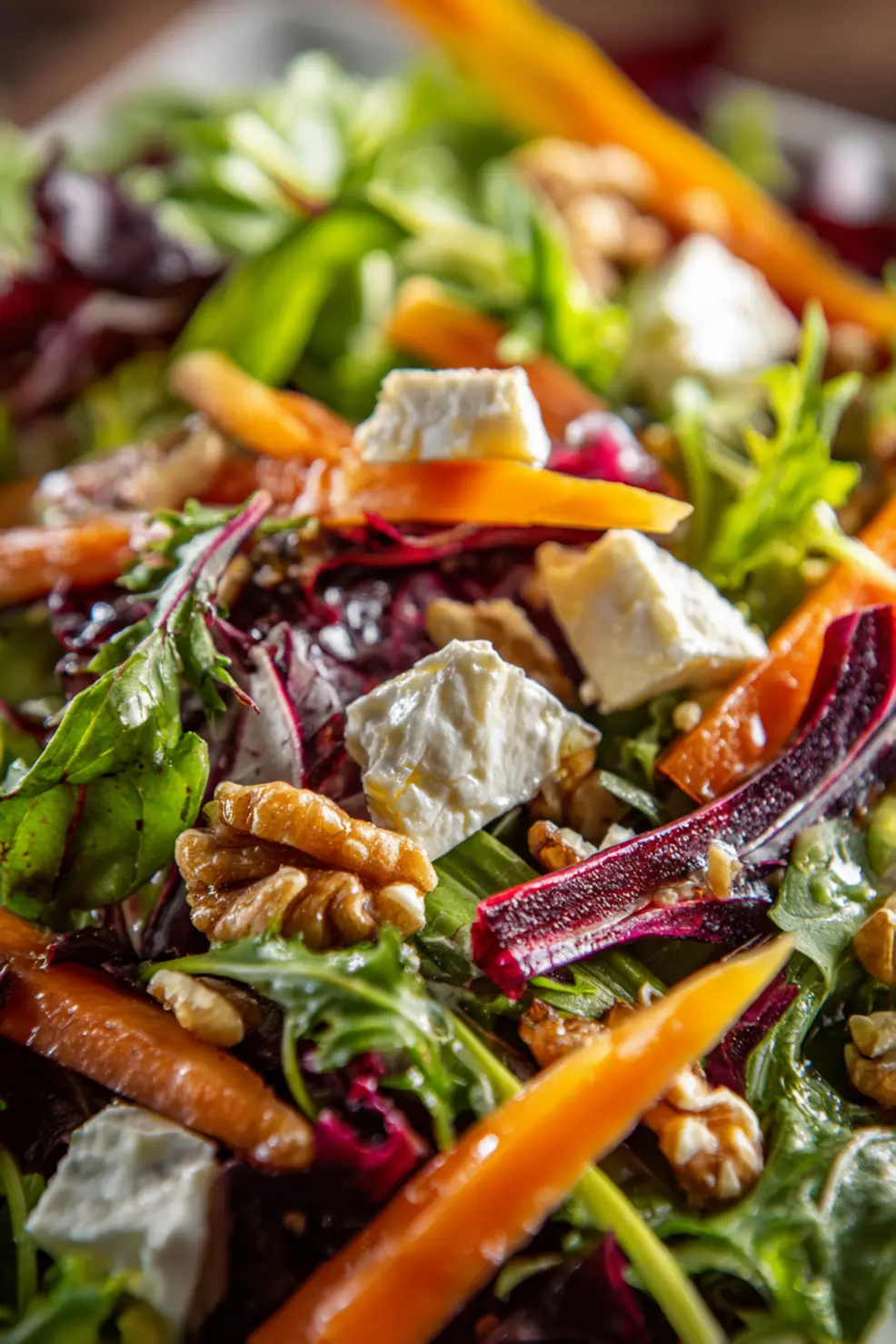
- Mixed greens (mesclun, butter lettuce, frisée)
- Thinly sliced radicchio
- Shaved carrots
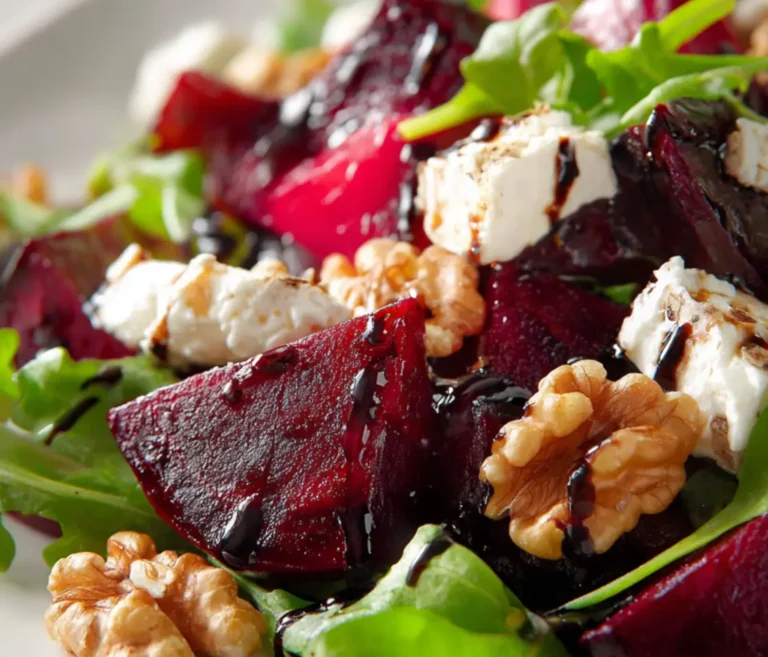
- Crumbled goat cheese
- Toasted walnuts
- Fresh herbs (tarragon, chives)
- Lemon juice
- Extra-virgin olive oil
- Dijon mustard
- Salt and pepper
- Thinly sliced radishes (optional)
- Shallots, minced (optional)
- Fresh tarragon leaves (optional)
- Champagne vinegar (optional)
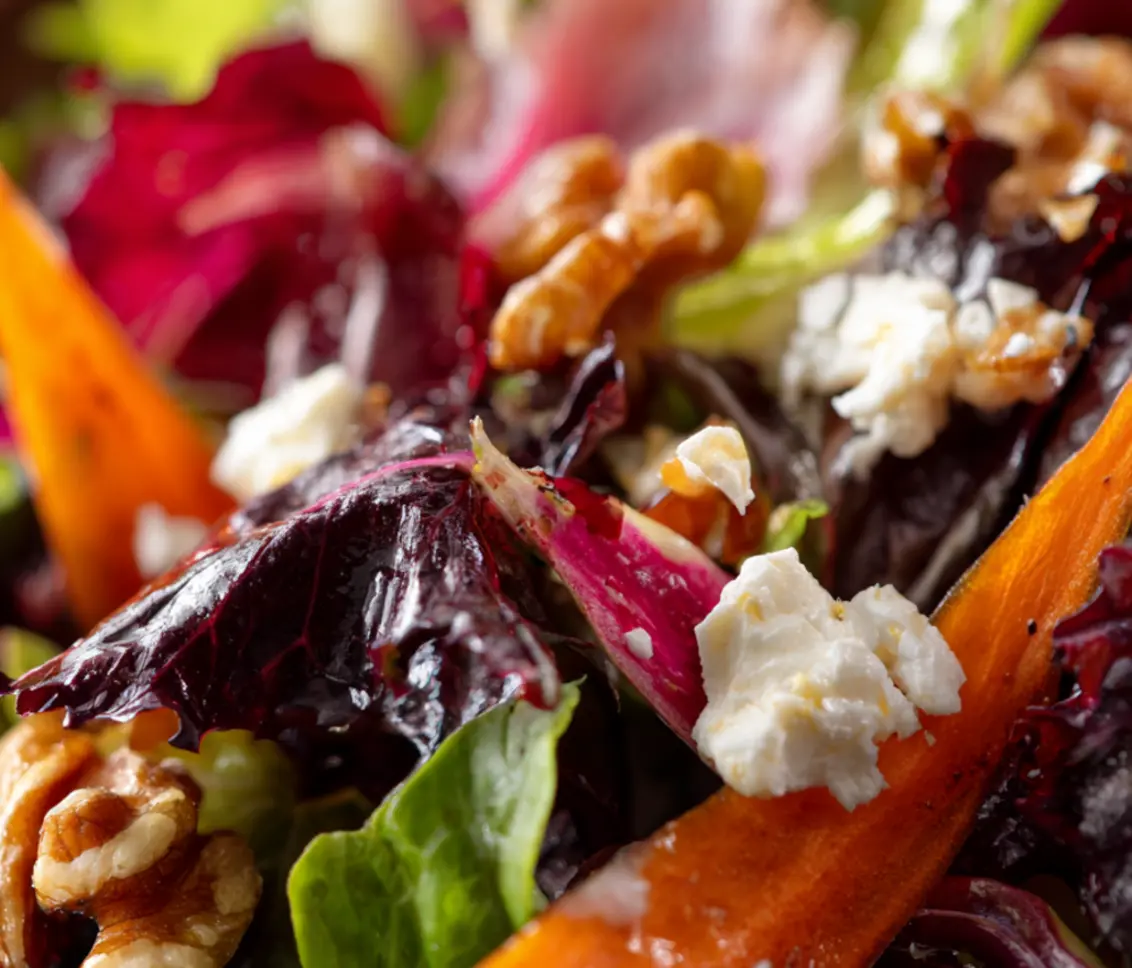
The beauty of a French salad lies in its thoughtful combination of flavors. The slight bitterness of radicchio balances the creamy goat cheese, while toasted walnuts add a pleasant crunch. Fresh herbs provide aromatic notes that elevate the entire dish, making it distinctively French in character.
Step-by-Step Instructions for the Perfect French Salad
How to Make It Perfectly
Creating a French salad is less about complicated techniques and more about proper preparation and thoughtful assembly. Follow these steps for salad perfection:
- Wash and thoroughly dry all greens. The French are particular about using completely dry greens, as this allows the vinaigrette to coat each leaf properly rather than becoming diluted with water.
- Toast walnuts in a dry skillet over medium heat for 3-5 minutes until fragrant and lightly browned, tossing occasionally to prevent burning. Allow to cool completely.
- Combine mixed greens, radicchio, carrots, goat cheese, cooled toasted walnuts, and herbs in a large bowl. Arrange them with a light touch to keep the delicate greens from becoming crushed.
- In a small bowl, whisk together lemon juice, olive oil, Dijon mustard, salt, and pepper to make the vinaigrette. The proper ratio is typically 3 parts oil to 1 part acid for a balanced French vinaigrette.
- Taste the vinaigrette and adjust seasoning as needed. The dressing should be bright but not overwhelmingly acidic.
- Just before serving, drizzle the vinaigrette over the salad and toss gently until evenly coated. The French prefer their salads lightly dressed, not swimming in dressing.
- Serve immediately on chilled plates for the most refreshing experience and to enjoy the crisp, bold flavors at their best.
A truly authentic French salad is dressed at the last moment to maintain the perfect texture of the greens. Take care not to overdress the salad—in French cuisine, the dressing should enhance, not overwhelm, the natural flavors of the ingredients.
Expert Tips & Seasonal Variations for Your French Salad
Simple Ways to Customize the Recipe
The beauty of a French salad lies in its adaptability while maintaining its essential character. Here are some expert tips and variations to help you create your perfect version:
- Always tear lettuce leaves by hand instead of cutting them with a knife to prevent browning at the edges—a technique French chefs swear by.
- For an authentic summer variation, add thinly sliced stone fruits like peaches or nectarines for a sweet counterpoint to the tangy dressing.
- During winter months, incorporate finely julienned endive and pomegranate seeds for a seasonal French salad that’s both colorful and flavorful.
- For a more substantial meal, add protein like poached eggs, flaked smoked salmon, or thinly sliced roasted chicken—all common additions in French bistros.
- Experiment with different French cheeses: crumbled Roquefort offers a bold flavor, while Comté provides a nutty, more subtle presence.
- For an herby variation, increase the amount of fresh herbs, particularly tarragon, which has a distinctive anise-like flavor beloved in French cuisine.
- In the tradition of waste-free French cooking, save your carrot tops to make a vibrant, nutrition-packed pesto that can be thinned with olive oil for an alternative dressing.
When making a French salad, remember that restraint is key. Rather than adding numerous ingredients, focus on a few high-quality components that work harmoniously together. This principle of simplicity is fundamental to the French approach to salad preparation.
Delightful Dressings That Complement Your Classic French Salad
Complementary Homemade Dressings
While the traditional French vinaigrette is perfect for this salad, you might want to explore other homemade dressings that pair beautifully with these ingredients:
- Zesty Lemon Basil Vinaigrette – This bright, herbaceous dressing complements the subtle flavors of the French salad while adding a Mediterranean twist.
- Cilantro Lime Vinaigrette – For a more contemporary fusion approach, this vinaigrette adds vibrant, citrusy notes that enhance the crispness of the greens.
- Creamy Feta Dressing – This tangier, creamier option works particularly well if you’re adding more robust ingredients like roasted vegetables to your French salad.
Each of these dressings maintains the essential lightweight character that makes French salads so refreshing. Remember that in French culinary tradition, a properly dressed salad should have each leaf lightly coated but never dripping with dressing.
Perfect Pairings for Your Parisian-Inspired French Salad
Main Courses That Create a Complete French Meal
A French salad can stand alone as a light lunch, but it truly shines when paired with complementary dishes that create a balanced French-inspired meal. Consider these classic pairings:
A simple roast chicken with herbs (poulet rôti) is perhaps the most quintessentially French main course to serve alongside your salad. The juicy, herb-infused chicken provides a satisfying contrast to the crisp, fresh greens.
For a heartier option with rich flavor, consider serving your French salad with French Onion Chuck Roast, which offers deep, caramelized flavors that balance beautifully with the brightness of the salad.
Breads and Sides for a Complete Experience
No French meal is complete without bread. Serve your French salad with:
A crusty baguette with salted butter (never unsalted in the French tradition) provides the perfect vehicle for cleaning your plate of any remaining vinaigrette.
For a more substantial meal, include a side of simple, herb-roasted potatoes dressed with a light sprinkle of fleur de sel.
In warmer weather, a chilled soup like vichyssoise makes an elegant companion to your French salad, creating a refreshing yet satisfying meal that celebrates the simplicity of French cuisine.
Proper Storage for Your French Salad Components
How to Store It Safely
While a French salad is best enjoyed immediately after assembly, there are ways to prepare components ahead of time:
Store washed and thoroughly dried greens in an airtight container lined with paper towels for up to 3 days. The paper towels absorb excess moisture and help keep the greens crisp.
Prepare your vinaigrette up to 5 days in advance and store it in a glass jar with a tight-fitting lid in the refrigerator. The vinaigrette will naturally separate when stored—simply shake vigorously before using.
Toast nuts ahead of time and store them in an airtight container at room temperature for up to a week. Toasting enhances their flavor and ensures they maintain their crunch in the salad.
For pre-cut vegetables like carrots or radishes, store them in cold water in the refrigerator to maintain their crispness, then drain and pat dry before adding to your salad.
Never store a fully assembled and dressed salad, as the greens will wilt quickly once coated with vinaigrette. If you must save leftover dressed salad, it can be refrigerated for up to 24 hours, though the texture will be significantly compromised.
FAQs About French Salad
What makes a salad specifically “French”?
A true French salad is defined by its simplicity, quality ingredients, and perfectly balanced vinaigrette. Unlike American salads that often contain many ingredients, a French salad typically features just a few carefully selected components that complement each other. The dressing is always applied with a light touch, just enough to enhance the natural flavors of the greens. Additionally, French salads are traditionally served after the main course to cleanse the palate, though in modern times they’re often enjoyed as starters or light meals.
Can I make my French salad ahead of time for a dinner party?
For the best results, prepare the components separately rather than assembling the entire salad in advance. You can wash and dry the greens, prepare the vegetables, toast the nuts, and make the vinaigrette up to a day before your event. Store each component properly (greens in a container lined with paper towels, vinaigrette in a sealed jar, etc.). About 15 minutes before serving, gently combine all elements except the dressing in your serving bowl. Dress the salad only at the last minute to maintain the perfect texture and freshness that defines a French salad.
What is the difference between French dressing in America and authentic French vinaigrette?
The bright orange, sweet French dressing commonly found in American supermarkets bears little resemblance to authentic French vinaigrette. A true French vinaigrette consists simply of oil, acid (vinegar or lemon juice), Dijon mustard, and seasonings, creating a light, translucent dressing. The mustard acts as an emulsifier, helping the oil and vinegar combine temporarily. American French dressing, by contrast, contains tomato paste or ketchup, sugar, and various additives that create its distinctive sweet flavor and thick consistency—ingredients that would never be found in an authentic French preparation.
Why the French Salad Deserves a Place in Your Regular Rotation
Final Thoughts
The French salad represents the perfect balance of simplicity and sophistication that characterizes so much of French cuisine. By focusing on fresh, quality ingredients and proper technique rather than complexity, this classic dish delivers remarkable flavor with minimal effort.
What makes the French approach to salad particularly valuable in our busy modern lives is its adaptability. The fundamental principles—quality greens, a light hand with dressing, and thoughtful composition—provide a framework that can accommodate seasonal changes and personal preferences while maintaining its essential character.
As you incorporate this French salad into your culinary repertoire, you’ll discover the joy of creating something truly special from humble ingredients. The French have long understood that eating well doesn’t require elaborate preparations or exotic components—just respect for good food and the pleasure of sharing it.
So the next time you’re looking for a salad that transcends the ordinary, turn to this classic French preparation. It’s a timeless dish that reminds us that sometimes, the simplest things truly are the most satisfying.
Other Salads to Try
Classic French Salad with Dijon Vinaigrette
Ingredients
Equipment
Method
- Toast the walnuts in a dry skillet over medium heat for 3-5 minutes until fragrant and lightly browned, tossing occasionally. Allow to cool completely before chopping.
- In a small bowl, whisk together lemon juice, vinegar (if using), Dijon mustard, salt, and pepper.
- Slowly drizzle in the olive oil while whisking continuously to create an emulsion. Taste and adjust seasoning if necessary.
- In a large salad bowl, gently combine the mixed greens, radicchio, shaved carrots, radishes (if using), and shallot (if using).
- Just before serving, drizzle the vinaigrette over the salad and toss gently until all ingredients are lightly coated.
- Sprinkle the crumbled goat cheese, toasted walnuts, and fresh herbs over the dressed salad.
- Serve immediately on chilled plates for the most authentic French dining experience.
Notes
- For the best flavor, make sure all ingredients are at room temperature except for the greens, which should be cool and crisp.
- Traditional French salads are dressed very lightly – aim for just enough vinaigrette to coat the leaves without pooling in the bottom of the bowl.
- If you can’t find good radicchio, substitute with Belgian endive for a similar pleasant bitterness.