Easy Homemade Korean Gochujang Sauce Recipe (Ready in 5 Minutes!)
Korean gochujang sauce combines the perfect balance of sweet, spicy, and umami flavors that can transform any ordinary dish into something extraordinary. This versatile sauce features gochujang paste as its star ingredient – a fermented Korean chili paste that’s been a staple in Korean cuisine for centuries. The deep, complex flavor profile comes from the fermentation process, which develops rich savory notes alongside the signature heat from Korean red pepper flakes. Unlike other hot sauces that simply bring heat, this gochujang sauce offers layers of flavor that dance on your palate.
How to Use This Versatile Korean Sauce
This homemade gochujang sauce recipe works brilliantly as a bibimbap sauce, adding authentic flavor to this popular Korean rice bowl. But don’t stop there – use it as a marinade for gochujang chicken, as a dipping sauce for spring rolls, or drizzled over a poke bowl. It’s considerably more versatile than traditional Korean BBQ sauce, offering a perfect balance between spice and sweetness that complements everything from roasted vegetables to grilled meats. If you’re looking to elevate your home cooking with authentic Asian flavors, this sauce deserves a permanent spot in your refrigerator.
Gochujang Sauce Ingredients You’ll Need
Simple Pantry Ingredients for Authentic Flavor
Creating this Korean gochujang sauce at home requires just a handful of ingredients that blend together to create that authentic flavor profile. Here’s what you’ll need:
- 2 tablespoons gochujang paste (Korean red chili paste)
- 1 tablespoon rice vinegar
- 1 tablespoon honey
- 1 teaspoon light soy sauce
- 1 teaspoon garlic powder
- 1 teaspoon toasted sesame oil
- ¼ teaspoon ginger powder
Understanding Gochujang Paste
Gochujang paste serves as the foundation of this sauce and brings most of the flavor complexity. This fermented chili paste combines glutinous rice, fermented soybeans, salt, and Korean red pepper flakes (gochugaru). It’s available in different heat levels, so you can choose one that suits your spice tolerance. You’ll find gochujang in the international aisle of most supermarkets, Asian grocery stores, or online retailers. The deep red paste comes in tubs or squeeze bottles and adds that authentic Korean flavor that simply can’t be replicated with a gochujang substitute.
How to Make Korean Gochujang Sauce Step by Step
Quick and Simple Preparation Method
Making this gochujang sauce couldn’t be easier. Just follow these simple steps for a perfect result every time:
- Gather all your ingredients and measuring tools.
- In a medium mixing bowl, add the 2 tablespoons of gochujang paste. The thick paste will form the base of your sauce.
- Add 1 tablespoon of rice vinegar to the bowl. This will help thin the sauce and add a pleasant acidity that balances the heat.
- Mix in 1 tablespoon of honey, which provides sweetness to balance the spicy chili paste.
- Add 1 teaspoon of light soy sauce for that savory umami flavor.
- Sprinkle in 1 teaspoon of garlic powder for depth of flavor.
- Pour in 1 teaspoon of toasted sesame oil, which adds a nutty dimension to the sauce.
- Finally, add ¼ teaspoon of ginger powder for a subtle warming spice note.
- Using a whisk, thoroughly combine all ingredients until completely smooth and uniform in color. Make sure to break up any clumps of gochujang paste for a silky-smooth texture.
- Your homemade Korean gochujang sauce is now ready to use immediately or store for later use.
What to Expect From the Final Texture
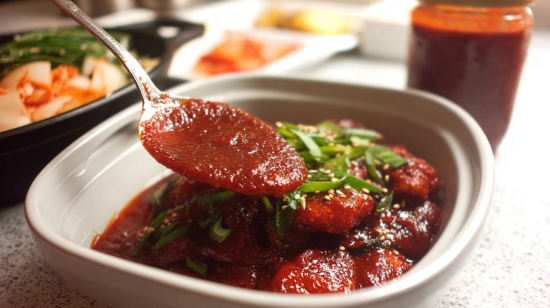
The finished sauce should have a smooth, pourable consistency that’s thicker than most dressings but thinner than the original gochujang paste. It will have a gorgeous deep red color with a glossy sheen from the sesame oil. The sauce should coat the back of a spoon nicely but still drip off in a steady stream. If your sauce seems too thick, you can adjust the consistency as needed (see tips section below).
Tips & Variations for Perfect Gochujang Sauce Every Time
Customizing the Heat Level
- Start with less gochujang paste (1 tablespoon) if you’re sensitive to spice, then gradually increase to find your perfect heat level
- For extra spiciness, add a pinch of gochugaru (Korean red pepper flakes) or a small amount of sriracha
- Balance excessive heat by adding more honey or a tablespoon of brown sugar
- For a milder sauce with similar flavor profile, use Korean BBQ sauce as a base and add a smaller amount of gochujang
Gochujang Sauce Consistency Adjustments
- For a thinner sauce ideal for drizzling, add 1-2 teaspoons of water or additional rice vinegar
- To create a thicker sauce perfect for dipping, reduce the liquid ingredients slightly
- For a creamier variation, whisk in 1-2 teaspoons of mayonnaise or Greek yogurt
- If your sauce is too thick after refrigeration, simply let it come to room temperature and whisk again
Creative Flavor Variations
- Add 1 teaspoon of yuzu sauce or fresh citrus juice for a bright, tangy twist
- Create a fusion sauce by mixing in 1 teaspoon of sambal sauce for additional complexity
- For a slightly different flavor profile, substitute gochugaru (Korean pepper flakes) for some of the gochujang paste
- Make it gluten-free by using a gluten-free soy sauce alternative or coconut aminos
Serving Ideas: Dishes That Shine With Gochujang Sauce
Perfect Pairings for Your Korean Gochujang Sauce
This versatile Korean sauce elevates so many dishes beyond traditional bibimbap. Here are some delicious ways to enjoy your homemade creation:
- Korean-Inspired Salads: Drizzle over a sesame-cucumber salad with radishes and scallions for a refreshing side dish
- Protein Bowls: Use as the finishing sauce for a salmon poke bowl with rice, avocado, and cucumber
- Grain Bowls: Transform ordinary quinoa or brown rice bowls by adding this sauce along with fresh vegetables and crispy tofu
- Noodle Dishes: Toss with cold soba noodles, shredded carrots, and fresh herbs for a quick lunch
- Wraps and Rolls: Serve as a dipping sauce for fresh spring rolls or as a spread inside wraps
- Roasted Vegetables: Brush onto sweet potatoes, Brussels sprouts, or cauliflower before roasting
- Marinades: Use as a base for marinading chicken, tofu, or tempeh before grilling or baking

Creative Fusion Applications
Take your culinary adventures further by incorporating this gochujang sauce into unexpected dishes:
- Spicy Avocado Toast: Drizzle over avocado toast topped with a fried egg
- Korean-Inspired Tacos: Use as a finishing sauce for fusion tacos with marinated protein and kimchi slaw
- Gochujang Mayo: Mix with mayonnaise to create a spicy spread for sandwiches and burgers
- Pizza Drizzle: Finish a fusion pizza with a light drizzle after baking
- Grain Salad Dressing: Thin with additional vinegar and oil to create a unique salad dressing for hearty grain salads
- Veggie Dip: Serve alongside fresh crudités for a spicy alternative to traditional dips
- Oven-Roasted Ribs: Brush over ribs in the oven for a sweet-heat, sticky finish that elevates classic ribs.
Proper Storage for Maximum Freshness
How Long Will Homemade Gochujang Sauce Last?
Your homemade Korean gochujang sauce will maintain its peak flavor and quality when stored properly. Transfer the sauce to an airtight container or glass jar with a tight-fitting lid immediately after preparation. When refrigerated, this sauce will stay fresh for up to one week. The fermented nature of gochujang paste helps preserve the sauce, but you’ll notice the best flavor within the first 3-4 days.
Before each use, give the container a good shake or stir with a clean spoon, as some separation may occur during storage. If the sauce thickens in the refrigerator, allow it to sit at room temperature for a few minutes and whisk again to restore its original consistency. For food safety, always use clean utensils when dipping into your sauce container to prevent contamination and extend shelf life.
Other Salad Sauces to Try
Frequently Asked Questions About Gochujang Sauce
Can I make this gochujang sauce without honey for a vegan version?
Absolutely! You can substitute the honey with maple syrup, agave nectar, or brown sugar dissolved in a bit of warm water. Each will provide slightly different flavor notes, but all work well in creating that sweet-spicy balance that makes gochujang sauce so delicious.
Is gochujang sauce the same as Korean BBQ sauce?
No, they’re different sauces with distinct flavor profiles. Korean BBQ sauce (often called bulgogi sauce) is typically sweeter and less spicy, made with soy sauce, brown sugar, garlic, and sometimes fruit like pears. Gochujang sauce is spicier with deeper, fermented flavors coming from the gochujang paste. Both are delicious Korean condiments but serve different culinary purposes.
What can I use if I can’t find gochujang paste?
While nothing exactly replicates gochujang’s unique fermented flavor, you can create a substitute by mixing 1 tablespoon of red chili paste (like sambal oelek) with 1 teaspoon of miso paste, a dash of soy sauce, and a pinch of sugar. This won’t have the same depth of flavor but will provide similar color and heat. Alternatively, try a mixture of sriracha and miso paste for a different but still delicious sauce base.
Conclusion: Master Korean Flavors at Home
Why This Gochujang Sauce Deserves a Place in Your Recipe Collection
This homemade Korean gochujang sauce recipe brings authentic Korean flavors into your kitchen with minimal effort. The complex flavors of fermented chili paste combined with the sweet-sour-savory balance make this sauce incredibly versatile. Whether you’re creating traditional Korean dishes or adding exciting new flavors to your everyday cooking, this sauce delivers impressive results with just a few minutes of preparation. The depth of flavor far exceeds store-bought alternatives, allowing you to control the heat level and customize it to your preferences.
Take Your Cooking to the Next Level
Once you’ve mastered this basic gochujang sauce recipe, you’ll find countless ways to incorporate these vibrant Korean flavors into your cooking repertoire. Try it as a marinade for gochujang chicken, mix it into stir-fries, or use it as a finishing sauce for roasted vegetables. The possibilities are endless, and you’ll soon discover why Korean cuisine has gained such popularity worldwide. This small batch recipe gives you the freedom to experiment without waste, and you’ll likely find yourself making it regularly as part of your meal prep routine. Enjoy the journey of exploring these bold, satisfying flavors!
Easy Homemade Korean Gochujang Sauce
Ingredients
Equipment
Method
- Combine all ingredients in a medium bowl: gochujang paste, rice vinegar, honey, light soy sauce, garlic powder, toasted sesame oil, and ginger powder.
- Whisk thoroughly until completely smooth with no lumps remaining.
- Use immediately or transfer to an airtight container for storage.
Notes
- For a thinner consistency, add a little water or extra rice vinegar.
- Adjust sweetness by adding more honey if the sauce is too spicy.
- For a gluten-free version, use tamari or coconut aminos instead of soy sauce.
- Store in an airtight container in the refrigerator for up to one week.