Quick and Crave-Worthy Chef Salad Recipe for Your Bold Lunch
Chef salad recipe enthusiasts know there’s something magical about this protein-packed classic that never goes out of style. With its perfect balance of crisp vegetables, savory proteins, and creamy cheese, a good chef salad delivers satisfaction in every bite while still feeling light and nourishing. This versatile dish has been a staple on American menus for decades, and for good reason – it’s delicious, filling, and endlessly customizable.
Whether you’re meal prepping for the week ahead or looking for a quick dinner solution, this chef salad recipe delivers exceptional flavor with minimal effort. The combination of tender chicken, savory ham, and perfectly boiled eggs provides ample protein to keep you energized, while the fresh vegetables add crunch, color, and essential nutrients. Let’s dive into creating this timeless classic with a few modern touches that will elevate your salad game.
The Story Behind the Classic Chef Salad
American Culinary History in a Bowl
The chef salad has a fascinating history dating back to the early 20th century. While its exact origins are debated, many food historians credit chef Louis Diat of New York’s Ritz-Carlton Hotel with popularizing this protein-rich creation in the 1940s. Others suggest it evolved from earlier “composed salads” where ingredients were artfully arranged rather than tossed together.
What makes a chef salad truly special is its hearty nature. Unlike lighter side salads, the chef salad was designed to be a complete meal, featuring a generous amount of protein alongside fresh vegetables. The classic version typically included julienned ham, chicken, cheese, and hard-boiled eggs over crisp lettuce – ingredients that most American home cooks would have on hand.
Over decades, the chef salad recipe has evolved to accommodate changing tastes and dietary preferences. Modern versions might feature turkey instead of ham, add avocado for healthy fats, or incorporate different cheese varieties. Despite these variations, the core concept remains the same: a satisfying, protein-packed salad that serves as a complete meal in itself.
Why You’ll Love This Chef Salad Recipe
Benefits Beyond Great Taste
This chef salad recipe stands out for several compelling reasons that make it worth adding to your regular meal rotation. First, it delivers exceptional nutritional value, providing a balanced combination of proteins, vegetables, and healthy fats in one bowl. The variety of ingredients ensures you’re getting a wide spectrum of nutrients with each serving.
Time-pressed home cooks will appreciate the efficiency of this recipe. With minimal cooking required (just boiling eggs if you don’t have them prepared), this chef salad comes together in minutes. Many components can be prepped ahead of time, making it perfect for busy weeknights or quick lunches.
Flexibility is another major advantage of this classic chef salad. The base recipe serves as a template that you can easily customize based on what’s in your refrigerator. Need to use up leftover roasted chicken? Swap it in for deli meat. Have some ripe avocado on hand? Add it for extra creaminess. This adaptability makes the chef salad a practical solution for reducing food waste while still enjoying a delicious meal.
Perhaps most importantly, this salad delivers on flavor and satisfaction. The combination of savory proteins, fresh vegetables, and your choice of dressing creates a meal that feels indulgent while still being wholesome. It’s the rare dish that pleases both health-conscious eaters and those looking for something substantial.
Ingredients for the Perfect Chef Salad
Everything You Need
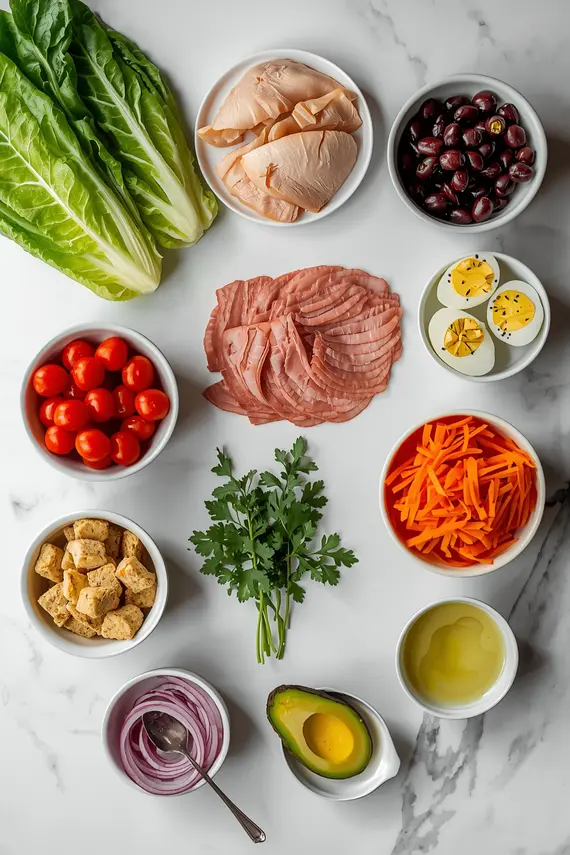
Gathering the right ingredients is the first step to creating an exceptional chef salad. This recipe balances classic components with a few modern additions to enhance flavor and nutrition. Feel free to make substitutions based on your preferences or what you have available.
- 8 cups romaine lettuce, washed and chopped (about 1 large head)
- 6 ounces cooked chicken breast, diced (about 1 cup)
- 4 ounces deli ham, julienned (about ⅔ cup)
- 4 ounces Swiss cheese, cubed (about ⅔ cup)
- 3 hard-boiled eggs, sliced
- 1 cup cherry tomatoes, halved
- 1 medium cucumber, sliced into half-moons
- ¼ cup black olives, pitted and sliced
- ¼ cup red onion, thinly sliced
- ½ cup croutons (optional, for added crunch)
- 1 avocado, diced (optional, for creaminess)
- ¼ cup shredded carrots (optional, for color and nutrition)
- 2 tablespoons fresh herbs like parsley or chives, chopped (optional, for brightness)
- ⅓ cup dressing of your choice
Ingredient Notes and Substitutions
The beauty of a chef salad recipe lies in its flexibility. Here are some notes on key ingredients and potential substitutions to help you customize your salad:
Lettuce Base: While romaine offers the perfect balance of crispness and flavor, you can use a mix of greens for added nutrition. Consider incorporating some baby spinach, arugula, or butter lettuce. Avoid delicate greens like spring mix that might wilt quickly under the weight of the toppings.
Protein Options: Traditional chef salad recipes call for both ham and chicken, but you can easily adapt based on dietary preferences. Turkey breast works wonderfully as a substitute for either meat. For a pescatarian version, consider adding flaked tuna or grilled shrimp instead. Vegetarians might replace the meats with chickpeas, cubed tofu, or additional hard-boiled eggs.
Cheese Selections: Swiss cheese is the classic choice, but cheddar, pepper jack, provolone, or feta offer delicious alternatives. For a lower-fat option, try part-skim mozzarella. Those avoiding dairy can either omit the cheese or use a plant-based alternative.
Vegetable Additions: Feel free to incorporate seasonal vegetables to enhance your chef salad. Radishes add a peppery crunch, bell peppers bring sweetness and color, and artichoke hearts contribute a unique flavor dimension. The key is maintaining a balance of textures and flavors while not overwhelming the salad with too many competing ingredients.
Step-by-Step Instructions
How to Make It Perfectly
Creating the perfect chef salad is about more than just combining ingredients—it’s about building layers of flavor and texture. Follow these detailed steps for a restaurant-quality result:
- Wash the romaine lettuce thoroughly, then dry it completely using a salad spinner or clean kitchen towels. Moisture is the enemy of crisp lettuce, so take your time with this step. Once dry, tear or chop the lettuce into bite-sized pieces and place it in a large serving bowl. For best results, chill the lettuce for at least 30 minutes before assembling your salad.
- Prepare your proteins by cutting them into uniform, bite-sized pieces. The chicken should be diced into approximately ½-inch cubes, while the ham works best julienned into thin strips. This ensures you get a bit of protein in each forkful without overwhelming the other ingredients.
- Cube the Swiss cheese into ¼-inch pieces. These small cubes distribute the cheese flavor throughout the salad better than larger chunks or shredded cheese.
- Slice the hard-boiled eggs using an egg slicer for uniform cuts, or carefully slice with a sharp knife. If you prefer, you can separate the whites and yolks, chopping each separately for a more distinctive presentation.
- Prepare the vegetables: halve the cherry tomatoes, slice the cucumber into thin half-moons, slice the olives if whole, and thinly slice the red onion. If you’re including optional carrots, shred them using the large holes of a box grater.
- To assemble, add about two-thirds of the protein and vegetable toppings to the lettuce bowl, gently tossing to distribute throughout the salad. This ensures flavorful bites throughout.
- Arrange the remaining proteins and vegetables on top of the tossed salad for a beautiful presentation. This traditional chef salad arrangement allows diners to see all the components.
- If including avocado, add it last to prevent browning. Sprinkle any optional fresh herbs over the top for a burst of color and flavor.
- For an individual serving approach, create a bed of lettuce on each plate and arrange the proteins and vegetables in neat rows or piles across the top for a classic composed salad presentation.
- Serve the dressing on the side or drizzle it over the salad just before serving. Toss gently to coat all ingredients if desired.
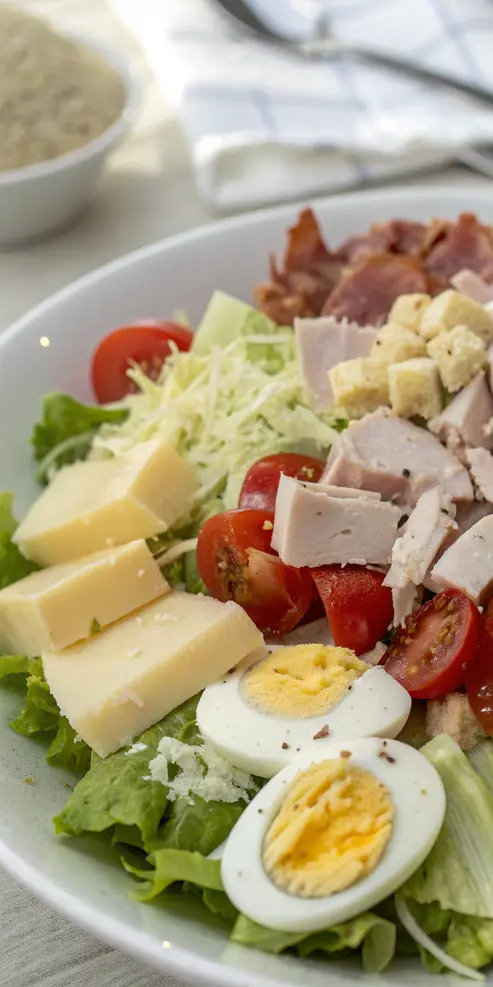
Elevating Your Chef Salad Experience: Tips & Variations
Simple Ways to Customize the Recipe
The beauty of a classic chef salad recipe is its versatility. Here are some professional tips and creative variations to take your salad from good to exceptional:
- Protein prep matters: For the most flavorful chicken, consider seasoning and grilling or roasting it instead of using plain poached chicken. A light marinade with lemon, garlic, and herbs makes a significant difference.
- Temperature contrast: Serve your chef salad with slightly warm proteins (freshly sliced chicken or ham) over cold, crisp lettuce for a delightful temperature contrast that elevates the entire dish.
- Textural elements: Add unexpected crunch with toasted nuts (walnuts or almonds), sunflower seeds, or crispy chickpeas. These not only add texture but boost the nutritional profile of your salad.
- Seasonal adaptations: Create a summer chef salad by adding fresh berries and stone fruits, or a fall version with roasted sweet potatoes and pumpkin seeds. Seasonal adaptations keep this classic recipe exciting year-round.
- International inspirations: Give your chef salad a Mediterranean twist by using feta instead of Swiss cheese and adding kalamata olives and artichoke hearts. Alternatively, try a Southwestern variation with pepper jack cheese, black beans, corn, and avocado.
- Dressing strategy: Instead of dressing the entire salad at once, lightly dress just the lettuce base before adding toppings. This ensures flavor throughout while preventing sogginess.
- Meal prep solution: Prepare all components separately and store in individual containers. Assemble fresh salads throughout the week for quick, healthy meals without the dreaded soggy lettuce.
Delicious Dressings That Enhance Your Chef Salad Recipe
Complementary Homemade Dressings
The dressing you choose can completely transform your chef salad experience. While store-bought options work in a pinch, homemade dressings elevate this classic dish with fresh flavors and no artificial ingredients. Here are some excellent dressing options that pair beautifully with the robust flavors of a chef salad:
- Ranch Dressing: A zesty ranch dressing adds creamy, herbaceous notes that complement the savory proteins in your chef salad. For something with extra character, try a Zesty Ranch Dressing with a Spicy Kick that balances heat with cool creaminess.
- Caesar Dressing: For a more robust flavor profile, consider a Caesar Salad Dressing Without Anchovies. This garlicky, parmesan-infused option adds depth without overpowering the salad’s components.
- Thousand Island: The sweet-tangy balance of a Homemade Thousand Island Dressing provides a nostalgic flavor that many consider the classic choice for chef salad recipes. Its creamy texture coats ingredients beautifully.
When serving for a group, consider offering two or three dressing options so guests can customize their experience. A lighter vinaigrette alongside a creamier option ensures everyone finds their perfect flavor pairing. Remember that with a well-crafted chef salad, the dressing should complement rather than overwhelm the fresh ingredients.
What to Serve With Your Chef Salad
Perfect Companions for a Complete Meal
While a chef salad recipe creates a satisfying standalone meal, thoughtfully selected side dishes can enhance the dining experience. The key is choosing accompaniments that complement without competing with your protein-rich salad. Here are some excellent pairings:
Crusty artisan bread or warm dinner rolls provide a perfect textural contrast to the crisp salad components. Consider serving garlic bread or rosemary focaccia for added flavor dimension. A light soup—like tomato bisque or chicken noodle—creates a classic soup-and-salad combination that works beautifully for lunch or dinner.
For a heartier meal that still maintains balance, consider serving your chef salad alongside a slow-cooked main dish like a Slow Cooker Beef Cassoulet. The rich flavors of the cassoulet complement the fresh, lighter notes of the salad, creating a satisfying contrast that pleases the palate.
Beverage Suggestions for the Perfect Pairing
The right beverage can enhance your chef salad experience. For non-alcoholic options, sparkling water with a squeeze of lemon or lime provides refreshing contrast. Unsweetened iced tea with a sprig of fresh mint offers a classic pairing that doesn’t overwhelm the salad’s flavors.
If you’re serving your chef salad for a special lunch, consider a light lemonade or fruit-infused water. A cucumber-mint infused water particularly complements the fresh vegetables in your salad while adding an element of sophistication to your meal.
For family meals, serving the chef salad with a variety of beverages allows everyone to customize their dining experience. Having a pitcher of water with citrus slices alongside individual beverage choices ensures all preferences are accommodated while keeping the focus on your beautifully crafted salad.
Storing Your Chef Salad for Maximum Freshness
How to Store It Safely
Proper storage is crucial for maintaining the quality of your chef salad ingredients. With the right approach, you can prepare components in advance or save leftovers without sacrificing taste or texture. Here’s how to store your chef salad for maximum freshness:
Dressed vs. Undressed Storage: Once dressed, a chef salad begins to wilt quickly. For best results, store undressed salad components separately from dressing. If you’ve already dressed the entire salad, consume it within 4-6 hours for optimal quality.
Component Storage: For meal prep or leftovers, store individual salad components separately in airtight containers. The lettuce base should be thoroughly dried and stored with a paper towel to absorb excess moisture. Keep proteins together in one container, and vegetables that release water (like tomatoes and cucumbers) in another.
Storage Duration Guidelines:
- Washed and dried lettuce: 3-5 days in a proper salad storage container
- Cooked chicken and ham: 3-4 days in the refrigerator
- Hard-boiled eggs: Up to 1 week peeled or unpeeled
- Cut vegetables: 2-3 days for maximum freshness
- Homemade dressing: 5-7 days in a sealed container
Refreshing Stored Ingredients: When ready to assemble your chef salad from stored components, take everything out of the refrigerator about 15 minutes before serving. This takes the chill off and allows flavors to develop. If your lettuce has lost some crispness, a quick 5-minute ice water bath followed by thorough drying can help revive it.
Avoiding Food Safety Issues: Always use clean utensils when handling stored components to prevent cross-contamination. Keep your chef salad ingredients refrigerated at 40°F (4°C) or below. If the salad has been sitting at room temperature for more than 2 hours (or 1 hour in hot weather), it’s safer to discard it than risk foodborne illness.
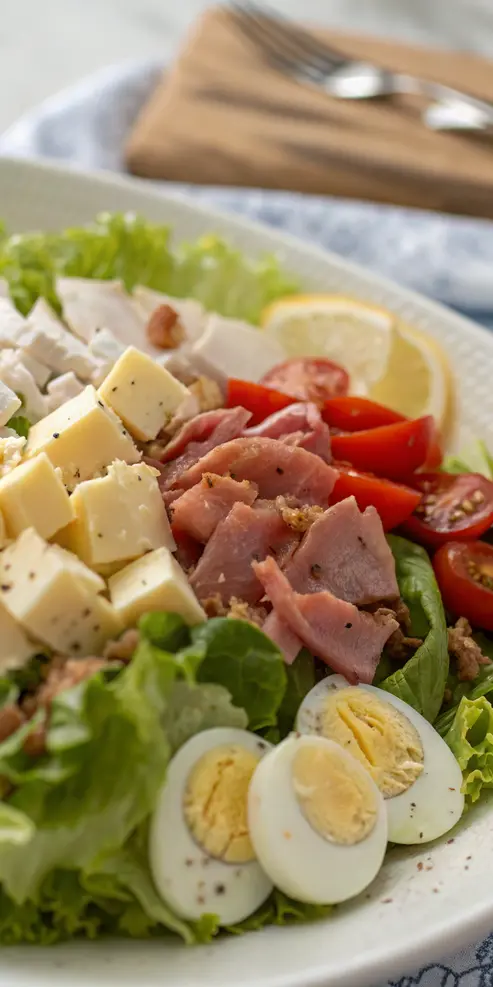
FAQs About chef salad recipe
What makes a chef salad different from a Cobb salad?
While both are protein-rich composed salads, they have distinct differences. Chef salads traditionally contain julienned ham and chicken (sometimes turkey) with Swiss cheese on a lettuce base. Cobb salads feature bacon, chicken, blue cheese, and avocado arranged in rows. Chef salads typically use a variety of dressings, while Cobbs are classically dressed with red wine vinaigrette. Both contain hard-boiled eggs and fresh vegetables, but the specific protein choices and presentation style distinguish these American classics.
Can I make a chef salad ahead of time for a party?
Yes, chef salads are excellent make-ahead options with proper preparation. For best results, prep all components separately up to 24 hours in advance. Store washed, thoroughly dried lettuce in a container lined with paper towels. Keep proteins, cheese, and vegetables in separate airtight containers. When ready to serve, arrange the salad no more than 30 minutes before the event and keep dressing on the side. For buffet-style service, consider creating a chef salad bar where guests can build their own, keeping ingredients fresh throughout the event.
What are the best protein alternatives for a vegetarian chef salad?
Traditional chef salads are meat-heavy, but vegetarian versions can be equally satisfying with thoughtful protein substitutions. Try marinated tofu cubes, smoked tempeh strips, or plant-based deli slices for similar texture and flavor profiles. Increase the eggs (if acceptable in your vegetarian diet) or add chickpeas, kidney beans, or edamame for protein-rich alternatives. Cheese varieties like smoked gouda or sharp provolone can provide the savory depth traditionally offered by meats. Adding nuts and seeds like sunflower seeds, pumpkin seeds, or chopped walnuts further boosts protein content while adding textural interest.
Nutritional Benefits of This Protein-Packed Chef Salad
A Healthy Meal in a Bowl
One of the many reasons to love a classic chef salad recipe is its impressive nutritional profile. This balanced meal provides a wide range of essential nutrients while keeping calories reasonable. Here’s what makes this salad a nutritionally sound choice:
The protein combination of chicken, ham, eggs, and cheese delivers all essential amino acids, supporting muscle maintenance and overall health. A typical serving provides approximately 25-30 grams of high-quality protein, making it an excellent option for active individuals. This protein content also contributes to the salad’s satisfying nature, helping you feel full longer.
The vegetable base delivers essential vitamins, minerals, and fiber. Romaine lettuce provides vitamin K, folate, and vitamin A, while tomatoes offer lycopene, a powerful antioxidant. Cucumbers add hydration and silica for skin health, and red onions provide quercetin, an anti-inflammatory compound. Together, these vegetables create a nutrient-dense foundation.
The chef salad’s balance of macronutrients—protein, fats, and carbohydrates—helps stabilize blood sugar levels, preventing the energy crashes associated with carbohydrate-heavy meals. When dressed with a moderate amount of dressing, this salad makes a satisfying meal that supports energy levels throughout the day.
For those monitoring their nutritional intake, this chef salad recipe can be easily adapted to suit specific dietary needs. Reducing cheese portions decreases saturated fat, while adding extra vegetables boosts fiber content. The flexibility of the recipe allows for personalization while maintaining its fundamental nutritional benefits.
Conclusion
Final Thoughts
The classic chef salad recipe represents the perfect intersection of nutrition, convenience, and satisfaction. With its balanced combination of protein-rich ingredients and fresh vegetables, it delivers a complete meal that can be adapted to suit any taste preference or dietary requirement. Whether you’re preparing a quick weeknight dinner, packing lunches for the week ahead, or entertaining guests, this versatile salad never disappoints.
What makes this recipe truly special is its foundation in culinary tradition combined with endless opportunities for personalization. From switching up the proteins to experimenting with different dressings, the chef salad template allows you to create a dish that reflects your unique taste preferences while still honoring the classic composition that has made it an American favorite for generations.
As you incorporate this chef salad into your meal rotation, don’t hesitate to make it your own. The best recipes evolve through personal touches and seasonal adaptations. Whether you follow the classic preparation or introduce your own creative twist, this protein-packed salad will continue to provide nourishing, satisfying meals that bring a touch of restaurant quality to your everyday dining.
We hope this comprehensive guide has equipped you with everything you need to create the perfect chef salad. From ingredient selection to storage tips, you now have the knowledge to make this classic dish shine in your kitchen. As with all cooking endeavors, the journey is as rewarding as the destination – enjoy the process of creating this timeless salad classic.
Other Protein-Packed Salads to Try
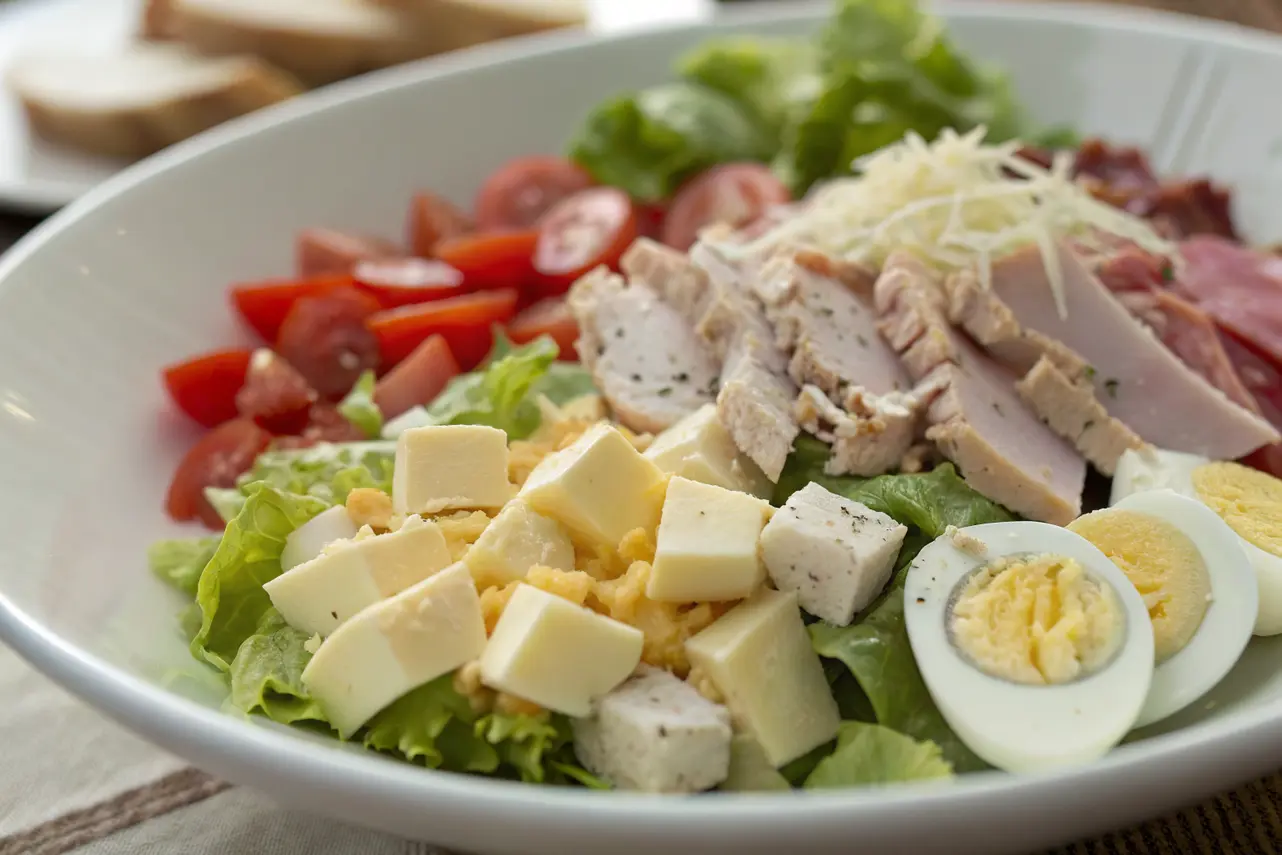
Classic Chef Salad
Ingredients
Equipment
Method
- Wash the romaine lettuce thoroughly, then dry it completely using a salad spinner or clean kitchen towels. Once dry, tear or chop the lettuce into bite-sized pieces and place it in a large serving bowl.
- Prepare your proteins by cutting them into uniform, bite-sized pieces. The chicken should be diced into approximately ½-inch cubes, while the ham works best julienned into thin strips.
- Cube the Swiss cheese into ¼-inch pieces.
- Slice the hard-boiled eggs using an egg slicer for uniform cuts, or carefully slice with a sharp knife.
- Prepare the vegetables: halve the cherry tomatoes, slice the cucumber into thin half-moons, slice the olives if whole, and thinly slice the red onion.
- To assemble, add about two-thirds of the protein and vegetable toppings to the lettuce bowl, gently tossing to distribute throughout the salad.
- Arrange the remaining proteins and vegetables on top of the tossed salad for a beautiful presentation.
- If including avocado, add it last to prevent browning. Sprinkle any optional fresh herbs over the top.
- Serve the dressing on the side or drizzle it over the salad just before serving. Toss gently to coat all ingredients if desired.
Notes
- For meal prep, store all components separately and assemble just before eating.
- To make this salad vegetarian, substitute the meats with chickpeas, additional eggs, or plant-based protein alternatives.
- For a lower-calorie version, use reduced-fat cheese and a light dressing.
- The nutrition information is an estimate based on the recipe as written, including 2 tablespoons of Ranch dressing per serving.